

We at Zirka InnoTech are privileged to collaborate with brilliant women in the field of science and technology, who continuously push forward innovation, shaping the future of our societies. To celebrate the International Day of Women and Girls in Science, we are launching a series of articles presenting some of these inspiring women and their work.
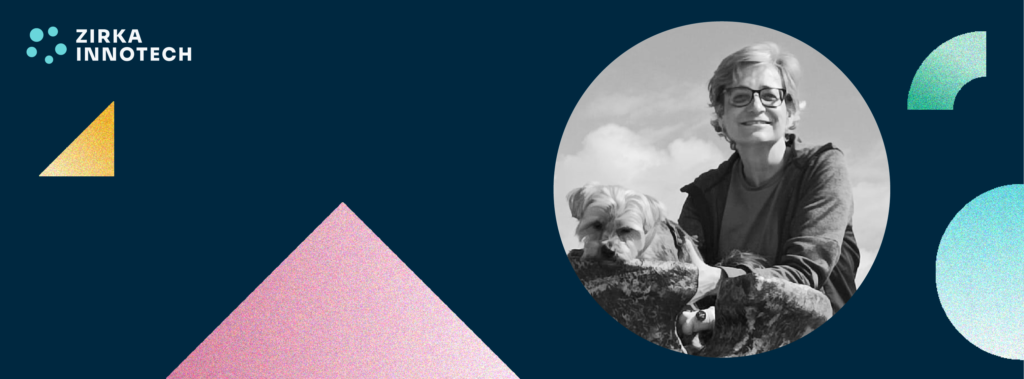
In this article, professor and ERC grantee Dina Schneidman from the Hebrew University of Jerusalem shares her journey and experiences in science—and why asking the right questions can be more important than having the perfect answers.
What is your current role, and in which area of science, technology, or innovation do you work?
I am a computational biologist working on the interface of biology and artificial intelligence. My research focuses on developing computational and machine-learning methods to understand how biological molecules interact and assemble into complex structures that carry out essential functions in cells.
What first sparked your interest in this field or motivated you to pursue a career in science, technology, or innovation?
I studied Computer Science and was especially fascinated by computer graphics and computer vision: how algorithms can be used to represent and manipulate complex 3D objects or recognise 3D patterns. At some point, I realised that proteins are also three-dimensional objects, just on a much smaller scale. That was a turning point for me: I saw that I could combine my passion for graphics and computation with biology and use those skills to work on problems that are not only intellectually exciting, but also genuinely useful for understanding life and disease.
“When women are included and empowered, the entire scientific ecosystem becomes stronger and more effective.”
From your experience, what has it been like to work in this sector as a woman?
One of the biggest challenges has been balancing a demanding scientific career with childcare and family responsibilities, especially during career stages that require intense focus, travel, and long hours. These pressures are often invisible but have a real impact on productivity and career progression. At the same time, I’ve also experienced strong mentorship, collaboration, and support.
What is one of the most important lessons you have learned throughout your professional career?
One of the most important lessons I’ve learned is that asking the right question matters more than having the perfect answer. Progress in science often comes from curiosity, persistence, and the willingness to step outside your comfort zone and learn new tools or disciplines when a problem demands it.
In your view, what do women contribute to the science and innovation ecosystem?
Women contribute different perspectives and collaborative leadership. When women are included and empowered, the entire scientific ecosystem becomes stronger and more effective.
What advice would you give to girls and women who are considering a career in science or innovation?
Curiosity and persistence matter far more than confidence. Seek mentors, ask questions, and don’t be afraid to follow your passion.